国产传媒

Digital Patient Podcast

国产传媒 Podcast - Episode 27 - Top 7 Digital Patient Engagement Myths

December 15, 2020
By
seamless

Subscribe on: | | | | |

Video:

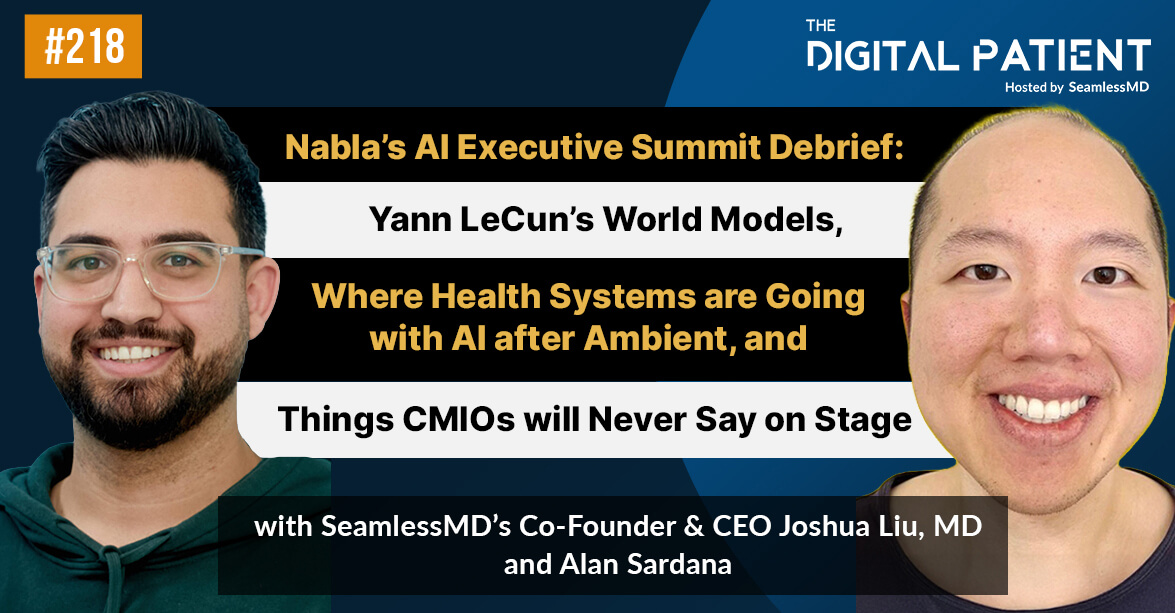
In this episode of the 国产传媒 Podcast, Dr. Joshua Liu, CEO of 国产传媒 & Marketing colleague, Alan Sardana, discuss the Top 7 Digital Patient Engagement Myths. See the full show notes below for details.

Guest(s): Dr. Joshua Liu (), Co-founder & CEO at 国产传媒

Episode 27 鈥 Show notes:

[0:07] Dr. Liu shares howTelemedicine, Virtual Care, and Digital Patient Engagement are often used interchangeablydue to the lack of a universally consistent framework of definition;

[1:00] Myth #1: 鈥淒igital patient engagement issynonymous with telemedicine and virtual care鈥

Telemedicine is the remote diagnosis and treatment ofpatients by means of telecommunications technology. In other words, telemedicineis using telecommunications technology to replace an in-person occurrence betweena patient and provider;

Virtual care is a larger umbrella term thatencompasses all the ways healthcare providers remotely interact with theirpatients. In addition to treating patients via telemedicine, providers may uselive video, audio, and instant messaging to communicate with their patientsremotely;

Digital patient engagement interacts with patients by guiding them betweenvisits (in-person or via telemedicine) using automated, pre-programmed educationand instructions based on their particular intervention;

[9:00] Myth #2: 鈥淒igital patient engagement is pointlessbecause of video visits鈥

Video visits are the 鈥渓ow-hanging fruit鈥 of telemedicine& virtual care as they replace an existing workflow (in-person visit);

Digital patient engagement screens patients in the background, determiningwhether a video visit is necessary, optimizing the workflow;

Thus, an optimized, digital workflow would have both;

[12:26] Myth #3: 鈥淒igital patient engagement is onlyfor young patients鈥

This myth stems from underestimating the technological prowess of senior citizens and fails to recognize how Digital Patient Engagement platforms such as 国产传媒 use a multi-channel (SMS, Email, App) approach that bypasses common communication barriers that older generations may experience;

[17:31] Myth #4: 鈥淢y EHR/EMR can do this already鈥

This myth is similar tosaying 鈥渨e have Microsoft Word so we don鈥檛 need Excel鈥;

Patient portals carry out other useful functions such as displaying lab results, but lack the algorithmic functions and comprehensive content needed for complex patient engagement;

Further, leading EHRslike Epic and Cerner recognized this gap and now recommend integrating 国产传媒with their patient portals. See 国产传媒鈥檚 listing on the and on ;

[22:25] Myth #5: 鈥淎 person can do exactly what digitalpatient engagement does鈥

This myth is technicallytrue, but not scalable. 国产传媒 serves not only as a non-labor-intensivealternative on a more regular occurrence, but also a more efficient datacollector and compiler;

To perform the same functionsas Digital Patient Engagement, an in-person auditor would need to:

  • Follow & guide each patient 24/7;
  • Send personalized messages, education & reminders based on the stage a patient is at (e.g. pre-op, post-op) as well as their unique profile (e.g. comorbidities);
  • Collect PROs, patient compliance & post-op symptoms;
  • Send self-management education based on the patient鈥檚 symptoms and activity;
  • Create graphs and charts mapping the patient鈥檚 progress and to display signs of complication;
  • Display population trends for each PRO data point (e.g. pain scores across the population, opioid use after discharge, mobilization compliance post-op day 1-30, etc.);
  • Combine each patient鈥檚 real-time activity with the population medical history data to produce real-time readmission predictions;

[31:14] Myth #6: 鈥淚t鈥檚 easy for us (a medicalinstitution) to go out and build our own app for digital patient engagement鈥

Anyone can build an app with sufficient time and money, but would also need to build a company dedicated to ongoing research and development to improve engagement rates, accessibility & maintenance;

[37:08] Myth #7: 鈥淒igital patient engagement is only valuable with big amounts of data, artificial intelligence & machine learning鈥

This is a myth because of the word 鈥渙nly鈥. Big data, artificial intelligence & machine learning can certainly make a better platform. But, good outcomes such as reduced Length of Stay, Readmissions, SSIs, and ED visits were achieved without machine learning in trials, simply by engaging patients digitally without A.I.;
国产传媒 Podcast - Episode 27 - Top 7 Digital Patient Engagement Myths

Posted by:
seamless
on
December 15, 2020

Subscribe on: | | | | |

Video:

In this episode of the 国产传媒 Podcast, Dr. Joshua Liu, CEO of 国产传媒 & Marketing colleague, Alan Sardana, discuss the Top 7 Digital Patient Engagement Myths. See the full show notes below for details.

Guest(s): Dr. Joshua Liu (), Co-founder & CEO at 国产传媒

Episode 27 鈥 Show notes:

[0:07] Dr. Liu shares howTelemedicine, Virtual Care, and Digital Patient Engagement are often used interchangeablydue to the lack of a universally consistent framework of definition;

[1:00] Myth #1: 鈥淒igital patient engagement issynonymous with telemedicine and virtual care鈥

Telemedicine is the remote diagnosis and treatment ofpatients by means of telecommunications technology. In other words, telemedicineis using telecommunications technology to replace an in-person occurrence betweena patient and provider;

Virtual care is a larger umbrella term thatencompasses all the ways healthcare providers remotely interact with theirpatients. In addition to treating patients via telemedicine, providers may uselive video, audio, and instant messaging to communicate with their patientsremotely;

Digital patient engagement interacts with patients by guiding them betweenvisits (in-person or via telemedicine) using automated, pre-programmed educationand instructions based on their particular intervention;

[9:00] Myth #2: 鈥淒igital patient engagement is pointlessbecause of video visits鈥

Video visits are the 鈥渓ow-hanging fruit鈥 of telemedicine& virtual care as they replace an existing workflow (in-person visit);

Digital patient engagement screens patients in the background, determiningwhether a video visit is necessary, optimizing the workflow;

Thus, an optimized, digital workflow would have both;

[12:26] Myth #3: 鈥淒igital patient engagement is onlyfor young patients鈥

This myth stems from underestimating the technological prowess of senior citizens and fails to recognize how Digital Patient Engagement platforms such as 国产传媒 use a multi-channel (SMS, Email, App) approach that bypasses common communication barriers that older generations may experience;

[17:31] Myth #4: 鈥淢y EHR/EMR can do this already鈥

This myth is similar tosaying 鈥渨e have Microsoft Word so we don鈥檛 need Excel鈥;

Patient portals carry out other useful functions such as displaying lab results, but lack the algorithmic functions and comprehensive content needed for complex patient engagement;

Further, leading EHRslike Epic and Cerner recognized this gap and now recommend integrating 国产传媒with their patient portals. See 国产传媒鈥檚 listing on the and on ;

[22:25] Myth #5: 鈥淎 person can do exactly what digitalpatient engagement does鈥

This myth is technicallytrue, but not scalable. 国产传媒 serves not only as a non-labor-intensivealternative on a more regular occurrence, but also a more efficient datacollector and compiler;

To perform the same functionsas Digital Patient Engagement, an in-person auditor would need to:

  • Follow & guide each patient 24/7;
  • Send personalized messages, education & reminders based on the stage a patient is at (e.g. pre-op, post-op) as well as their unique profile (e.g. comorbidities);
  • Collect PROs, patient compliance & post-op symptoms;
  • Send self-management education based on the patient鈥檚 symptoms and activity;
  • Create graphs and charts mapping the patient鈥檚 progress and to display signs of complication;
  • Display population trends for each PRO data point (e.g. pain scores across the population, opioid use after discharge, mobilization compliance post-op day 1-30, etc.);
  • Combine each patient鈥檚 real-time activity with the population medical history data to produce real-time readmission predictions;

[31:14] Myth #6: 鈥淚t鈥檚 easy for us (a medicalinstitution) to go out and build our own app for digital patient engagement鈥

Anyone can build an app with sufficient time and money, but would also need to build a company dedicated to ongoing research and development to improve engagement rates, accessibility & maintenance;

[37:08] Myth #7: 鈥淒igital patient engagement is only valuable with big amounts of data, artificial intelligence & machine learning鈥

This is a myth because of the word 鈥渙nly鈥. Big data, artificial intelligence & machine learning can certainly make a better platform. But, good outcomes such as reduced Length of Stay, Readmissions, SSIs, and ED visits were achieved without machine learning in trials, simply by engaging patients digitally without A.I.;

Recent news from 国产传媒

TDP 207: BSMH鈥檚 Jason Szczuka: Building Coalitions That Actually Move Innovation Forward, The 18-24 Month 鈥淪cale or Sunset鈥 Rule for Pilots, and Creating Organization Readiness Through Incentives and Desperation
December 11, 2025

TDP 207: BSMH鈥檚 Jason Szczuka: Building Coalitions That Actually Move Innovation Forward, The 18-24 Month 鈥淪cale or Sunset鈥 Rule for Pilots, and Creating Organization Readiness Through Incentives and Desperation

Learn More
TDP 206: MHS鈥 ACMIO Dr. Michael Weiss: Fixing "Rogue" Clinical Notes, Designing Workflows for Rare but High-Risk Events, and Applying Goldilocks Principles to Governance
December 9, 2025

TDP 206: MHS鈥 ACMIO Dr. Michael Weiss: Fixing "Rogue" Clinical Notes, Designing Workflows for Rare but High-Risk Events, and Applying Goldilocks Principles to Governance

Learn More
TDP 205: Duke Health鈥檚 Dr. Eric Poon: Understanding Informatics as a Sociotechnical Team Sport, Co-Creating AI Tools to Promote Accountability, and Why We Must Kiss a lot of Frogs to Find Real Innovation
December 4, 2025

TDP 205: Duke Health鈥檚 Dr. Eric Poon: Understanding Informatics as a Sociotechnical Team Sport, Co-Creating AI Tools to Promote Accountability, and Why We Must Kiss a lot of Frogs to Find Real Innovation

Learn More