国产传媒

Digital Patient Podcast

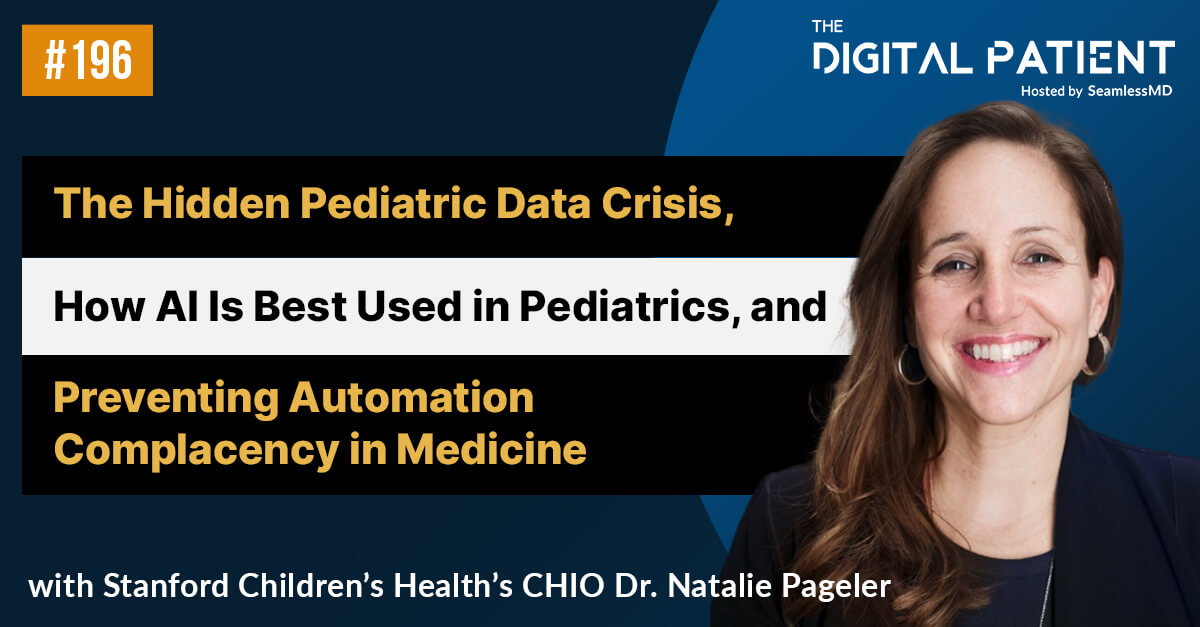
TDP 196: Stanford Children鈥檚 CHIO Dr. Natalie Pageler: The Hidden Pediatric Data Crisis, How AI Is Best Used in Pediatrics, and Preventing Automation Complacency in Medicine

October 23, 2025
By
seamless

Subscribe on: | | | | |

On this episode of The Digital Patient, Dr. Joshua Liu, Co-founder & CEO of 国产传媒, and colleague, Alan Sardana, chat with Dr. Natalie Pageler, CHIO at Stanford Children's Health, about "The Hidden Pediatric Data Crisis, How AI Is Best Used in Pediatrics, Preventing Automation Complacency in Medicine, and more..." Click the play button to listen or read the show notes below.

Audio:

Guest(s):

  • Dr. Natalie Pageler, CHIO at Stanford聽Children's Health
  • Dr. Joshua Liu, Co-founder & CEO at 国产传媒

Episode 196 - Show Notes:

[00:00:07] Episode preview

[00:05:16] How Dr. Pageler鈥檚 path from engineering to pediatrics began with a mentor advocating for abused children.

[00:05:48] How volunteering in a child-abuse shelter inspired her to pursue medicine and pediatrics.

[00:06:26] Discovering a love for physiology in the PICU and completing a fellowship that blended medicine and education.

[00:06:58] Taking a biomedical informatics elective revealed clinical decision support as 鈥渏ust-in-time education.鈥

[00:07:31] How collaborating with Dr. Chris Longhurst on a PICU decision-support project launched her informatics career.

[00:08:06] Leading Stanford Children鈥檚 Epic implementation while co-founding one of the first Clinical Informatics Fellowships.

[00:09:39] Why pediatrics requires unique informatics鈥攃hildren鈥檚 physiology and autonomy change dramatically with age.

[00:11:12] The challenge: nearly all children鈥檚 EHR phone numbers actually belong to parents, creating communication and privacy risks.

[00:11:58] How incorrect contact data can lead to privacy breaches鈥攅ven sensitive results sent to parents of adult patients.

[00:15:39] Stanford Children鈥檚 redesigned workflows to prevent entry of phone/email for children under 12, ensuring guardian data accuracy.

[00:18:27] Complex downstream effects鈥攑atient-matching algorithms, pharmacy interfaces, and front-desk lookup workflows required redesign.

[00:22:34] Multi-year, organization-wide collaboration ensured safe implementation; even appointment reminders were affected.

[00:26:42] Why accurate pediatric data is foundational鈥攎ixing parent/child data can distort AI and machine-learning models.

[00:30:07] Rolling out ambient AI across clinics: testing how models handle families and multiple voices in pediatric exam rooms.

[00:30:58] Ambient AI restores focus to patient-family conversations by removing the computer barrier between provider and child.

[00:32:16] Exploring ethical concerns鈥攔ecording, consent, and privacy for teens and sensitive topics.

[00:33:10] Early results show less documentation time, faster encounter closure, and happier clinicians.

[00:35:02] Identifying low-risk, high-ROI AI use cases: ambient scribes, back-office automation, and safety-event pattern detection.

[00:36:50] Using LLMs to reduce manual chart review for surgical-site infections and safety incidents.

[00:39:19] Evaluating rapidly evolving models requires new guardrails and standards to ensure safe, accurate results.

[00:39:58] Avoiding 鈥渟hiny-object syndrome鈥: Stanford relies on rigorous research partnerships before operational adoption.

[00:40:55] Example鈥攖urning a digital-health diabetes research project into standard care, reducing school and work disruption for families.

[00:43:56] How automation changes medical training: after an EHR downtime, many residents no longer knew how to write admission orders.

[00:45:26] The next challenge鈥攄eciding which foundational skills trainees must still master amid AI assistance.

[00:47:38] Building systems with guardrails to ensure reliability even when AI personalizes orders or decisions.

Fast 5 Lightning Round:

  1. What is your favorite book or book you鈥檝e gifted the most?
    The Lost Art of Getting Lost by Rebecca Solnit
  2. If you could instantly master any skill, what would it be?
    Pottery
  3. Would you rather have Super strength, super speed, or the ability to read people鈥檚 minds?
    Mind reading
  4. What is something in healthcare you believe that others might find insane?
    How little any one physician can know of modern medicine.
  5. What is the last movie or TV show you saw?
    Ted Lasso (rewatching with her 94-year-old neighbor)

The Digital Patient has been recognized as Feedspot's . Thank you to our listeners for making this happen!
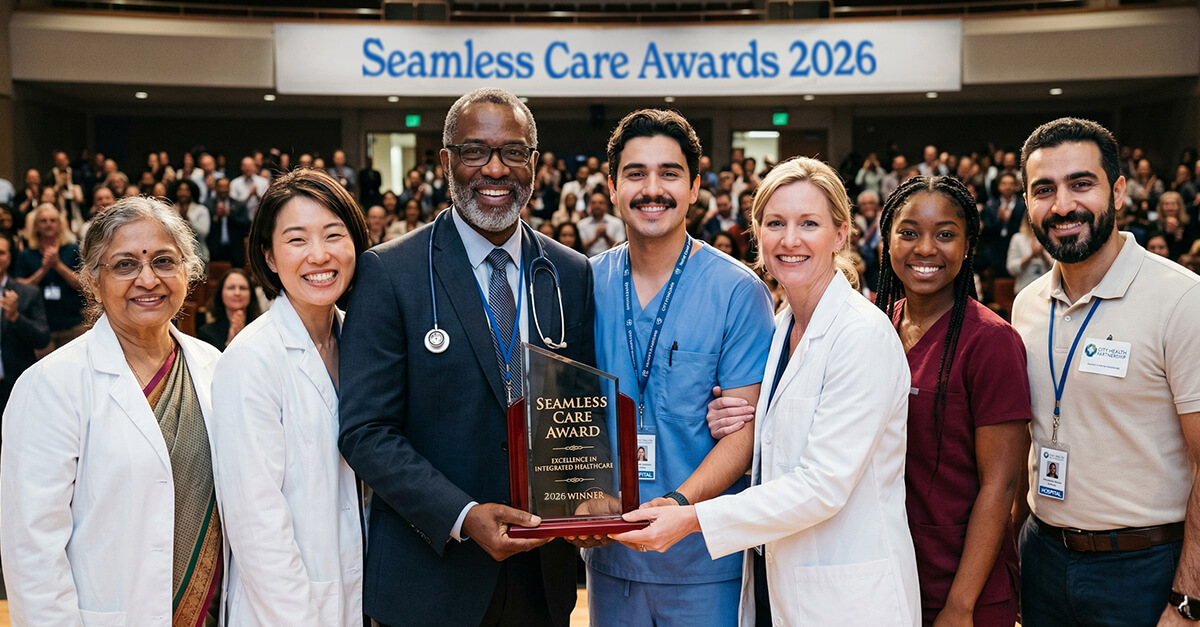

TDP 196: Stanford Children鈥檚 CHIO Dr. Natalie Pageler: The Hidden Pediatric Data Crisis, How AI Is Best Used in Pediatrics, and Preventing Automation Complacency in Medicine

Posted by:
seamless
on
October 23, 2025

Subscribe on: | | | | |

On this episode of The Digital Patient, Dr. Joshua Liu, Co-founder & CEO of 国产传媒, and colleague, Alan Sardana, chat with Dr. Natalie Pageler, CHIO at Stanford Children's Health, about "The Hidden Pediatric Data Crisis, How AI Is Best Used in Pediatrics, Preventing Automation Complacency in Medicine, and more..." Click the play button to listen or read the show notes below.

Audio:

Guest(s):

  • Dr. Natalie Pageler, CHIO at Stanford聽Children's Health
  • Dr. Joshua Liu, Co-founder & CEO at 国产传媒

Episode 196 - Show Notes:

[00:00:07] Episode preview

[00:05:16] How Dr. Pageler鈥檚 path from engineering to pediatrics began with a mentor advocating for abused children.

[00:05:48] How volunteering in a child-abuse shelter inspired her to pursue medicine and pediatrics.

[00:06:26] Discovering a love for physiology in the PICU and completing a fellowship that blended medicine and education.

[00:06:58] Taking a biomedical informatics elective revealed clinical decision support as 鈥渏ust-in-time education.鈥

[00:07:31] How collaborating with Dr. Chris Longhurst on a PICU decision-support project launched her informatics career.

[00:08:06] Leading Stanford Children鈥檚 Epic implementation while co-founding one of the first Clinical Informatics Fellowships.

[00:09:39] Why pediatrics requires unique informatics鈥攃hildren鈥檚 physiology and autonomy change dramatically with age.

[00:11:12] The challenge: nearly all children鈥檚 EHR phone numbers actually belong to parents, creating communication and privacy risks.

[00:11:58] How incorrect contact data can lead to privacy breaches鈥攅ven sensitive results sent to parents of adult patients.

[00:15:39] Stanford Children鈥檚 redesigned workflows to prevent entry of phone/email for children under 12, ensuring guardian data accuracy.

[00:18:27] Complex downstream effects鈥攑atient-matching algorithms, pharmacy interfaces, and front-desk lookup workflows required redesign.

[00:22:34] Multi-year, organization-wide collaboration ensured safe implementation; even appointment reminders were affected.

[00:26:42] Why accurate pediatric data is foundational鈥攎ixing parent/child data can distort AI and machine-learning models.

[00:30:07] Rolling out ambient AI across clinics: testing how models handle families and multiple voices in pediatric exam rooms.

[00:30:58] Ambient AI restores focus to patient-family conversations by removing the computer barrier between provider and child.

[00:32:16] Exploring ethical concerns鈥攔ecording, consent, and privacy for teens and sensitive topics.

[00:33:10] Early results show less documentation time, faster encounter closure, and happier clinicians.

[00:35:02] Identifying low-risk, high-ROI AI use cases: ambient scribes, back-office automation, and safety-event pattern detection.

[00:36:50] Using LLMs to reduce manual chart review for surgical-site infections and safety incidents.

[00:39:19] Evaluating rapidly evolving models requires new guardrails and standards to ensure safe, accurate results.

[00:39:58] Avoiding 鈥渟hiny-object syndrome鈥: Stanford relies on rigorous research partnerships before operational adoption.

[00:40:55] Example鈥攖urning a digital-health diabetes research project into standard care, reducing school and work disruption for families.

[00:43:56] How automation changes medical training: after an EHR downtime, many residents no longer knew how to write admission orders.

[00:45:26] The next challenge鈥攄eciding which foundational skills trainees must still master amid AI assistance.

[00:47:38] Building systems with guardrails to ensure reliability even when AI personalizes orders or decisions.

Fast 5 Lightning Round:

  1. What is your favorite book or book you鈥檝e gifted the most?
    The Lost Art of Getting Lost by Rebecca Solnit
  2. If you could instantly master any skill, what would it be?
    Pottery
  3. Would you rather have Super strength, super speed, or the ability to read people鈥檚 minds?
    Mind reading
  4. What is something in healthcare you believe that others might find insane?
    How little any one physician can know of modern medicine.
  5. What is the last movie or TV show you saw?
    Ted Lasso (rewatching with her 94-year-old neighbor)

The Digital Patient has been recognized as Feedspot's . Thank you to our listeners for making this happen!

Recent news from 国产传媒

TDP 199: Mount Sinai鈥檚 CDTO Robbie Freeman: Enabling Clinician Led AI Innovation, Embedding Forward-Deployed Engineers into Clinical Workflows, and Empowering Nurses to Lead Ethical AI
November 6, 2025

TDP 199: Mount Sinai鈥檚 CDTO Robbie Freeman: Enabling Clinician Led AI Innovation, Embedding Forward-Deployed Engineers into Clinical Workflows, and Empowering Nurses to Lead Ethical AI

Learn More
TDP 198: OSF HealthCare鈥檚 Roopa Foulger: Why 80% of Healthcare AI Fails in the Real World, Inside OSF鈥檚 Three-Horizon Innovation Strategy, and When to Break the Rules of Evidence-Based Tech
November 4, 2025

TDP 198: OSF HealthCare鈥檚 Roopa Foulger: Why 80% of Healthcare AI Fails in the Real World, Inside OSF鈥檚 Three-Horizon Innovation Strategy, and When to Break the Rules of Evidence-Based Tech

Learn More
TDP 197: Parkview Health鈥檚 CMIO Dr. Mark Mabus: From Escape-Room Training to TikTok-style Edutainment, Infusing Creativity into Healthcare IT Training, and Preparing Clinicians for the Future of the EHR
October 30, 2025

TDP 197: Parkview Health鈥檚 CMIO Dr. Mark Mabus: From Escape-Room Training to TikTok-style Edutainment, Infusing Creativity into Healthcare IT Training, and Preparing Clinicians for the Future of the EHR

Learn More